

Midtown Manhattan’s Calvary Baptist Church Project by Zonca Terrazzo Wins NTMA Honor Award
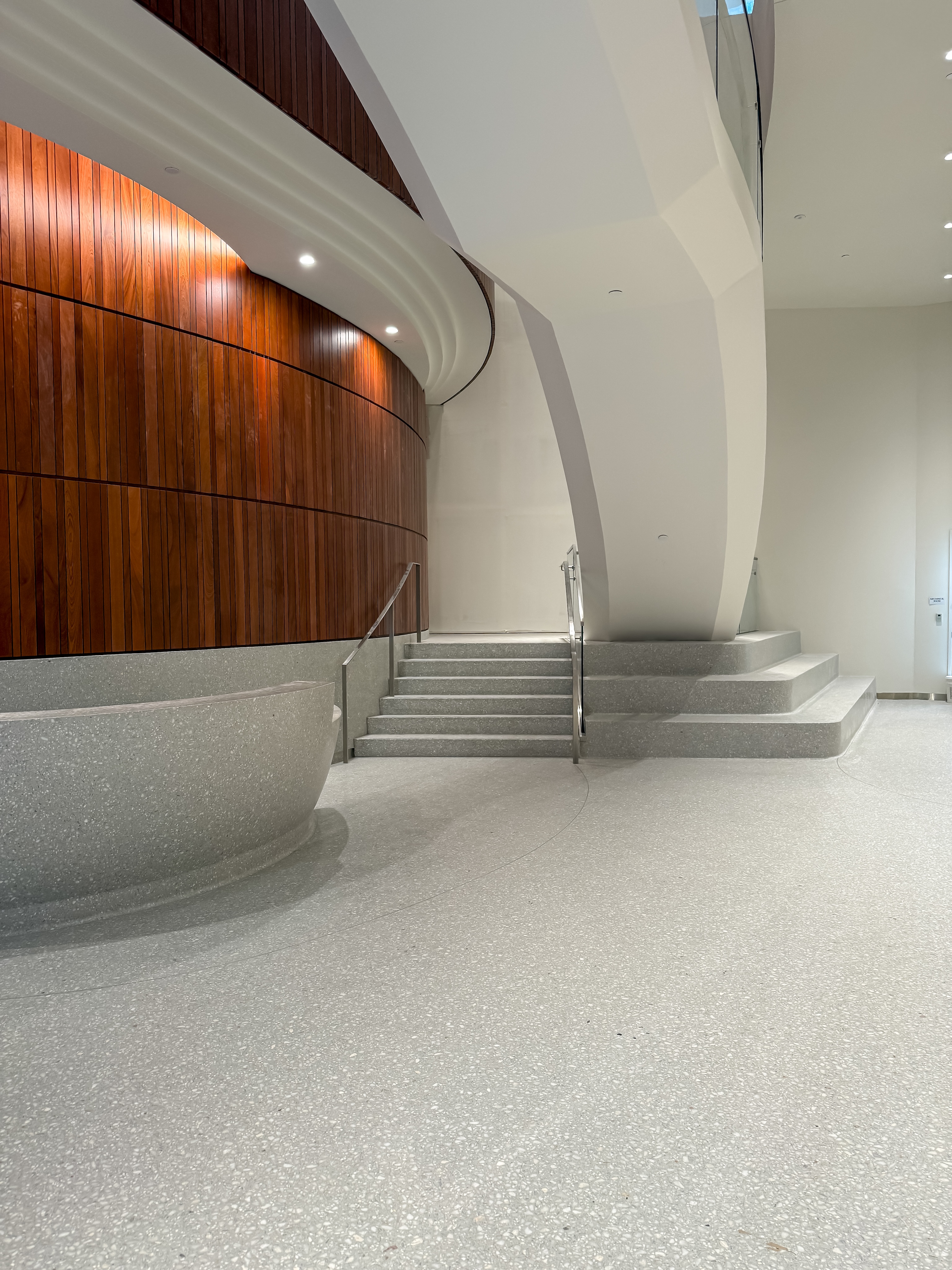
Calvary Baptist Church’s new lobby at 125 West 57th Street showcases Zonca Terrazzo & Mosaic’s 2026 NTMA Honor Award–winning terrazzo installation in the sculptural reception desk and base of the main stair. Courtesy of Zonca Terrazzo / Matt Holdswroth
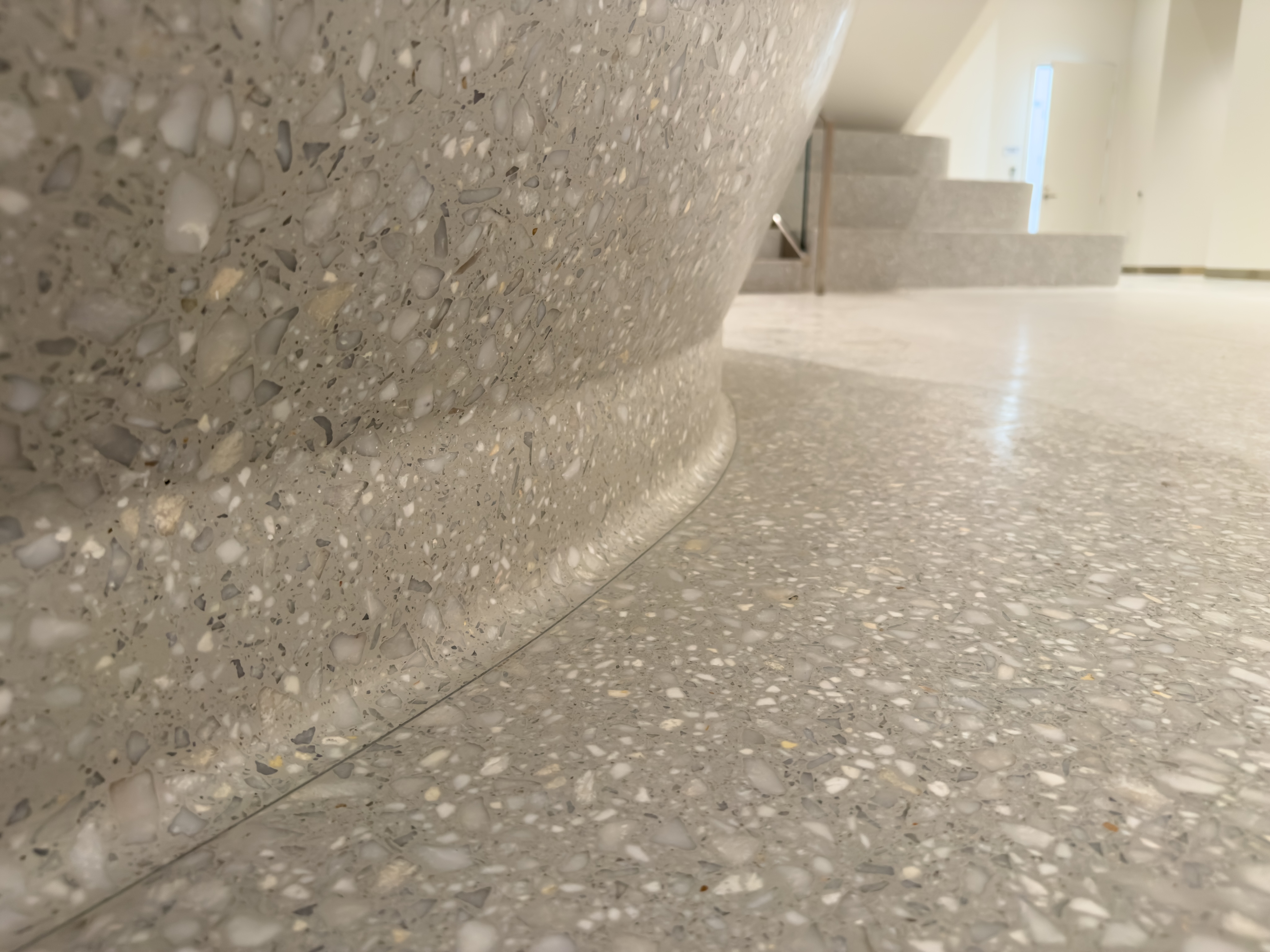
The hand‑crafted terrazzo desk demonstrates how Venetian aggregates bring depth and texture to a high‑traffic church lobby while delivering the durability and long‑term value central to the project’s design.
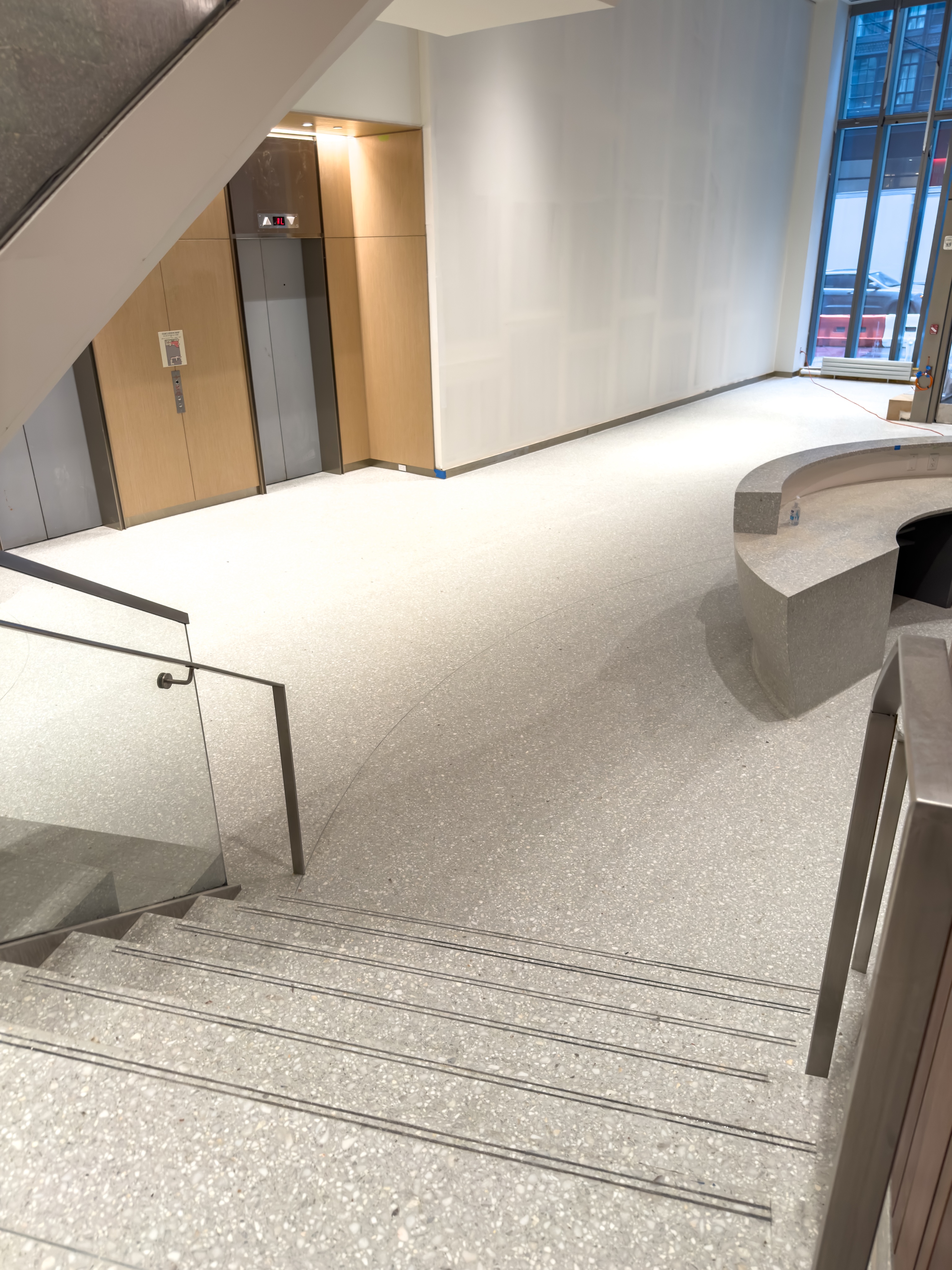
Continuous terrazzo surfaces link floor, desk, and elevator, expressing the project’s goal of unifying circulation and worship spaces within a compact urban footprint.
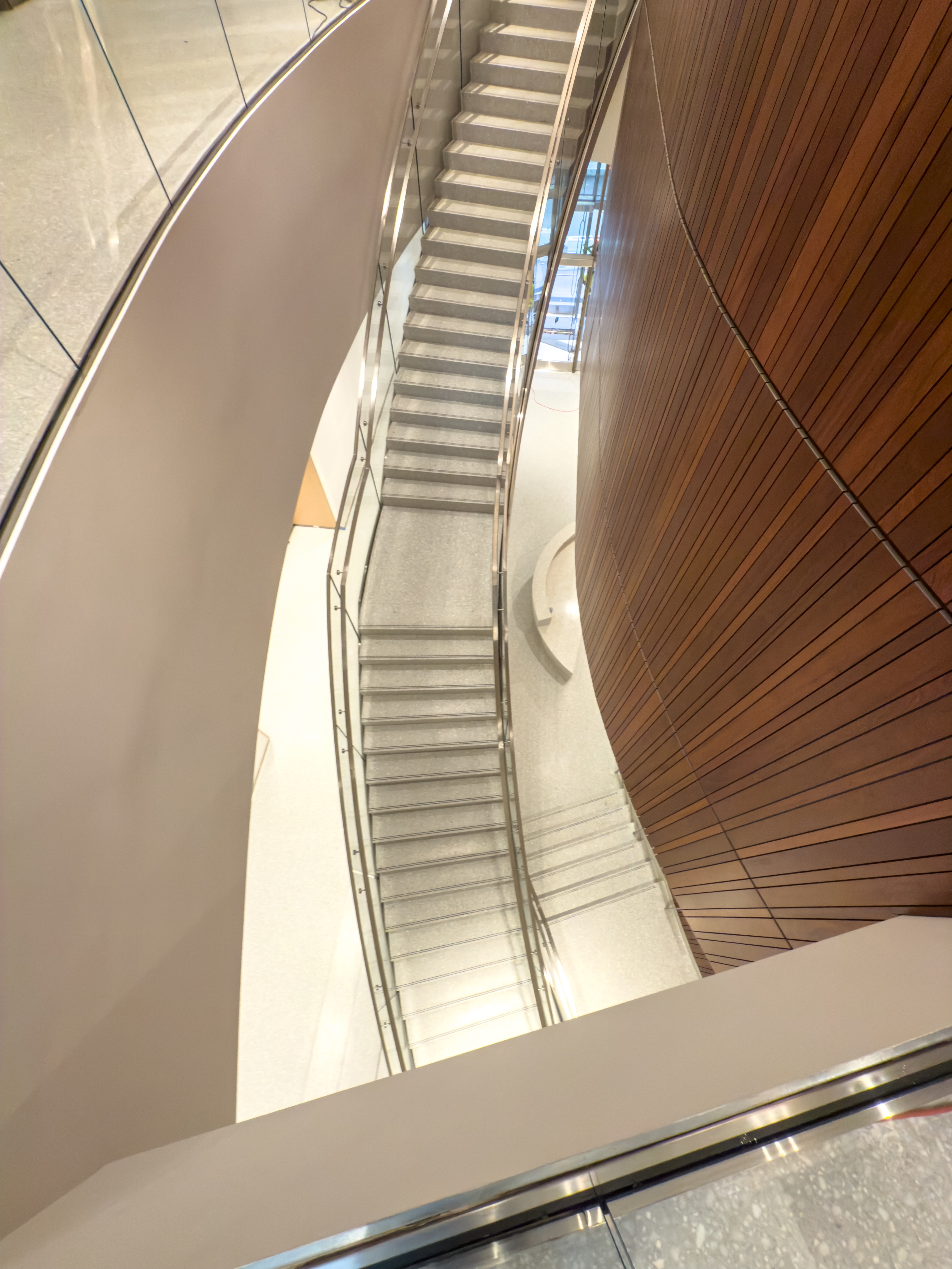
The precast terrazzo stair, paired with a warm wood wall, highlights the project’s balance of resilient public‑space materials and refined architectural detailing in the Midtown Manhattan church’s new home.

Terrazzo unifies the reimagined church interior in a new 30‑story tower, forming floors, stairs, and sculptural elements throughout.
Calvary Baptist Church has occupied its West 57th Street address since 1883. When adjacent properties were assembled for a new 30-story curtain-wall office tower, the church's new home was incorporated into the building’s base—remaining at its historic midtown location while gaining a fully reimagined contemporary interior.
Exploring Three Dimensions
The design was led by Alex Leung, AIA, principal at FX Collaborative. His ambition for the project went well beyond the floor plane, opening up a new understanding of what the material could do. For Leung, the project was his first experience using terrazzo on vertical surfaces.
"I like that terrazzo is not only a flat surface; you can create organic, three-dimensional forms," he said. "It folds up and forms seating, folds up to a curvilinear form and lobby desk, rolling up and turning into something organic to echo the interior design of the church." The reception desk is the most direct expression of that idea: a sweeping poured-in-place form that curves outward as it rises.
Continuity & Character
Terrazzo flows across the entry level and through multiple floors, unified by a monochromatic epoxy terrazzo system with zinc divider strips that trace the geometry of floors, stairs, and seating. "In the entry, the level of continuity was very important," Leung said.
Terrazzo in the public circulation areas draws visitors inward and connects the building’s levels. Two staircases in precast terrazzo, one connecting the first and second floors, and another U-shaped stair linking the second and third, continue that visual language as sculptural circulation elements. The finish also extends into elevator cabs.
Leung valued the way terrazzo performs visually at different scales: “There is the big picture versus close up, where you can bring something else with the material itself," he said. The installation specified Venetian terrazzo, an NTMA classification for aggregate chips larger than standard size but smaller than the irregular stone slabs of Palladiana. At a distance, the formula reads as a unified surface; up close, the aggregate reveals depth and texture.
Designed for Durability
"We selected terrazzo because of the durability and ease of maintenance for the church, a new modern interior inside a new building," said Leung. "It's a proven material that performs well in public circulation and high traffic spaces, if properly designed, detailed, and maintained."
At Calvary Baptist Church, terrazzo’s long tradition of craftsmanship is reimagined in a contemporary context, designed to endure for generations of congregants and visitors.
About Zonca Terrazzo
Founded in 2014, Zonca Terrazzo & Mosaic specializes in epoxy and cementitious terrazzo systems, providing installation and restoration services for commercial and residential projects throughout the New York metropolitan area.
About the National Terrazzo & Mosaic Association
The annual NTMA Honor Awards recognize outstanding terrazzo installations completed by association member contractors. Entries are evaluated by design professionals and terrazzo specialists on design achievement, craftsmanship, and technical execution. A full list of this year's Honor Award recipients is available at ntma.com.
Founded in 1923, the NTMA is a nonprofit trade association of over 150 contractor and supplier members, headquartered in Fredericksburg, Texas. The organization establishes national standards for all terrazzo systems and applications, advancing quality craftsmanship and innovation while supporting its members in the trade.
The NTMA provides a broad range of free resources for architects, designers, artists, contractors, maintenance professionals, and property owners. From assisting design teams with specifications to offering technical guidance throughout a project, the NTMA helps ensure terrazzo installations meet the highest standards. The association also offers AIA-registered continuing education programs for architects and design professionals. For more information about terrazzo resources, visit ntma.com. NTMA Technical Director Gary French is available at gary@ntma.com.
Terrazzo originated in 15th-century Italy, building on the mosaic traditions of ancient Rome. Venetian marble workers repurposed discarded stone chips into durable, decorative surfaces—a practice that made terrazzo an early sustainable material. Today, terrazzo is still poured by hand on-site, with options for precast panels and waterjet-cut details. Stone, recycled glass, or other aggregates—which may be locally sourced—are set in a cement or epoxy base, and the surface is then polished to reveal the aggregate's color and texture. Valued for its design versatility, ease of maintenance, durability, sustainability, and lifecycle value, terrazzo is built to last the life of a building.
Chad Rakow
National Terrazzo & Mosaic Assocation
+1 800-323-9736
info@ntma.com
Visit us on social media:
LinkedIn
Instagram
Facebook
YouTube
TikTok
National Terrazzo & Mosaic Association 2026 Honor Awards l
Legal Disclaimer:
EIN Presswire provides this news content "as is" without warranty of any kind. We do not accept any responsibility or liability for the accuracy, content, images, videos, licenses, completeness, legality, or reliability of the information contained in this article. If you have any complaints or copyright issues related to this article, kindly contact the author above.
