

East Harlem Council for Human Services Urges Albany to Protect Funding for Health Centers Serving 2.5M New Yorkers
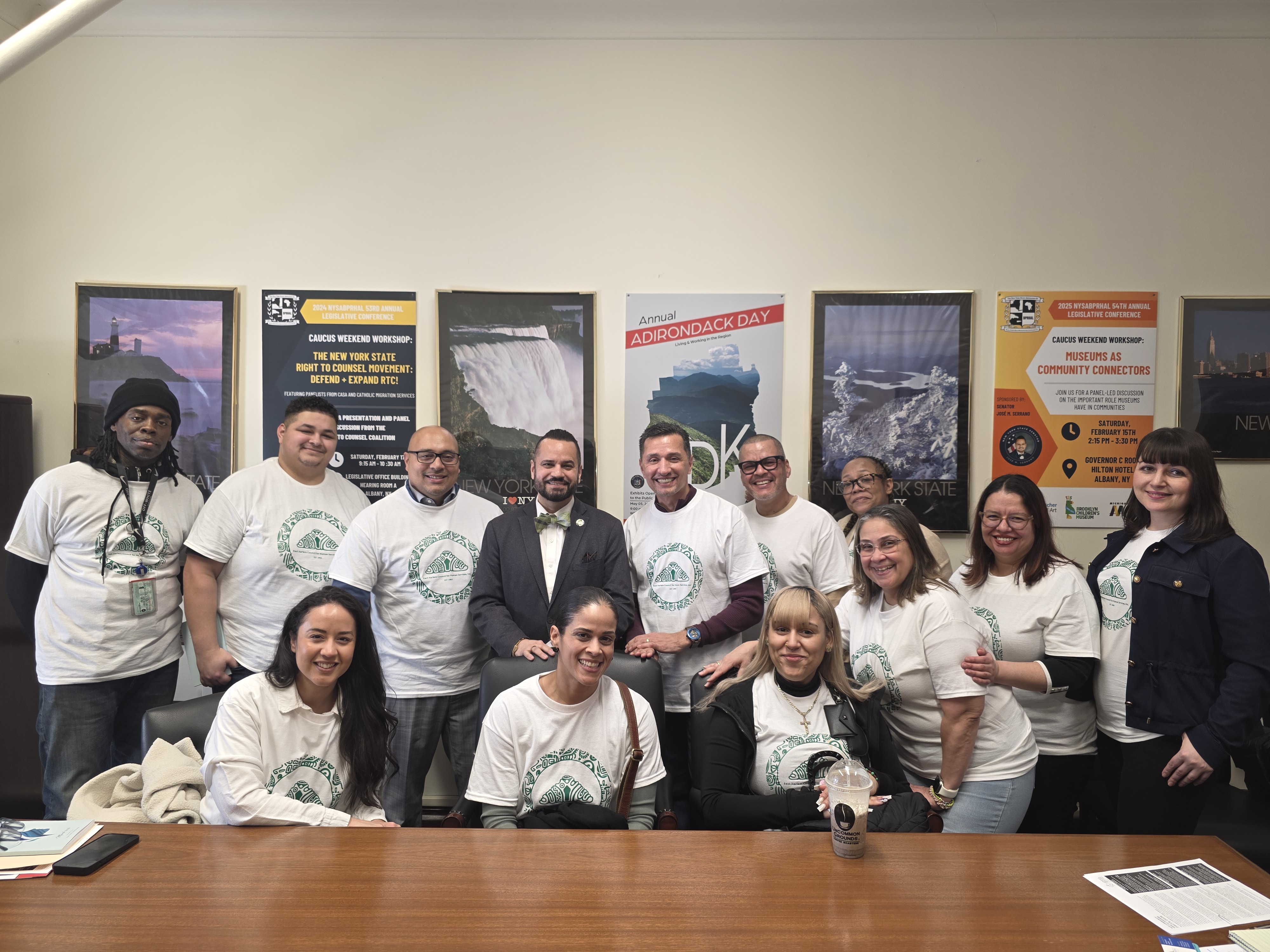
Dr. Adam Aponte and the East Harlem Council team with Senator José M. Serrano in Albany for Advocacy Day, standing up for community health centers and the millions of New Yorkers who rely on them for care.
NEW YORK , NY, UNITED STATES, March 6, 2026 /EINPresswire.com/ -- With the proposed state budget, community health centers that serve more than 2.5 million New Yorkers, 1 in 8 New Yorkers, leaders from the East Harlem Council for Human Services, Inc. (Council) traveled to Albany on March 3rd and 4th to urge lawmakers to increase support for Federally Qualified Health Centers (FQHCs).
The visit coincided with CHCANYS’ annual Advocacy Day, which brought together representatives from all 80 federally qualified health centers that run over 900 sites across New York State to meet with legislators and highlight the essential role community health centers play in providing primary and preventive care to some of New Yorks most vulnerable populations.
Advocates warned that reductions in funding resulting from the passage of HR 1 and the proposed Medicaid cuts could have immediate consequences for immigrant, low-income, and urban communities that depend on culturally competent and accessible healthcare services. CHCANYS estimates that FQHCs across NYS will have an over $300 million loss in revenue. While the Governor’s budget has allocated $60 million in funding to Community Health Centers this falls significantly short and will not fill the gap.
During the visit, Dr. Adam Aponte, CEO of the Council and a board-certified pediatrician with more than 25 years of experience serving underserved communities, met with several lawmakers to discuss the importance of maintaining funding for safety-net healthcare providers. Meetings included discussions with Assembly Member Edward Gibbs, Senator Cordell Cleare, Assembly Member Manny De Los Santos, and Senator José M. Serrano.
“Community health centers are essential to the health and stability of our neighborhoods,” said Dr. Aponte. “For many families, these centers are the first, and sometimes only, point of access to medical care. Any reduction in FQHC funding would have immediate and lasting consequences for the communities we serve. Protecting these resources is vital to ensuring that millions of New Yorkers continue to receive the care they need and deserve.”
Community health centers play a critical role in New York’s healthcare system, providing pediatric care, preventive services, chronic disease management, and other essential medical support to underserved populations regardless of insurance status or ability to pay.
Founded in 1965, the Council has spent nearly six decades supporting the health and well-being of families in East Harlem and surrounding communities. The organization operates the Boriken Neighborhood Health Center, a federally qualified health center that provides bilingual, community-based care to over 12,000 patients each year.
Through its network of services, the Council works to ensure that underserved populations have consistent access to medical care, preventive services, and long-term health support within their communities.
At the conclusion of their visit, leaders from the Council reiterated their call for state leaders to prioritize full funding for community health centers in the final state budget, emphasizing that continued investment in community-based healthcare infrastructure is critical to maintaining access to care across New York State.
About The East Harlem Council for Human Services
The East Harlem Council for Human Services, Inc. is a nonprofit organization founded in 1965 by East Harlem residents committed to improving access to comprehensive, culturally relevant health and human services in their community. Through its flagship Boriken Neighborhood Health Center, an HRSA-federally qualified health center and NCQA Patient-Centered Medical Home, and additional school-based health centers at PS 7, PS 112, and PS 155, EHCHS provides medical, dental, behavioral health, and social services to some of the neighborhood’s most vulnerable populations. The Council also prides itself on establishing one of NYC’s first fully bilingual Head Start founded in 1969 as well as its Senior Nutrition Program funded by DFTA for Older Adults at Casabe Houses. Guided by a mission to advance health equity and well-being, EHCHS integrates coordinated, team-based care with strong community partnerships. https://boriken.org/
Jacob Berkowitz
Rubenstein Public Relations
+1 212-805-3093
jberkowitz@rubensteinpr.com
Legal Disclaimer:
EIN Presswire provides this news content "as is" without warranty of any kind. We do not accept any responsibility or liability for the accuracy, content, images, videos, licenses, completeness, legality, or reliability of the information contained in this article. If you have any complaints or copyright issues related to this article, kindly contact the author above.
